Karate-Do highlight #55: No stone unturned
Overlooking, under valuing, and under appreciating are common traits of general practitioners in all areas of art or forms of discipline.
There is a reason so few make it to the pinnacle of an art or discipline and that is a common neglect of the details, especially when the details are seen or understood as insignificant.
If I asked you the question, "what is the first movement in tai kyoku shodan", you would probably say "down block" and you would not necessarily be wrong and yet there are many details overlooked with such a reply to what seems like a basic question.
You begin a kata with your feet connected as you rei. Your feet then seperate as your hands cross in front of your midsection only to uncross in sync with the separation of your feet, one foot at a time. The announcement of the kata sets the tone. It must be expressed through engagement of your core and should capture the attention of the audience if present and embody the spirit of a karate ka.
These details are commonly overlooked because they are often misunderstood. There are several meanings or analogies one could describe to explain those movements prior to a kata and not to say one is more right than the other but perhaps this may enlighten you and better your understanding of those movement.
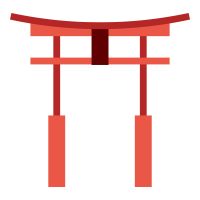
The movements prior to a kata are symbolic. They represent a bridge from common to sacred. Rei, a symbol of respect before presenting such honored movements. The crossing and uncrossing motion of your hands can be seen as the opening of a gateway onto a sacred path to which those same movements at the end of a kata close said gate. They could also be seen as opening a new chapter in a book of many katas, flipping to the page of the kata you are presenting, aiming to present the words exactly as they are written.
This is one example in one area of your training that typically goes unseen. Imagine what else you may bring to light if you fixate both of your eyes on the journey rather than one on the destination.
Sensei